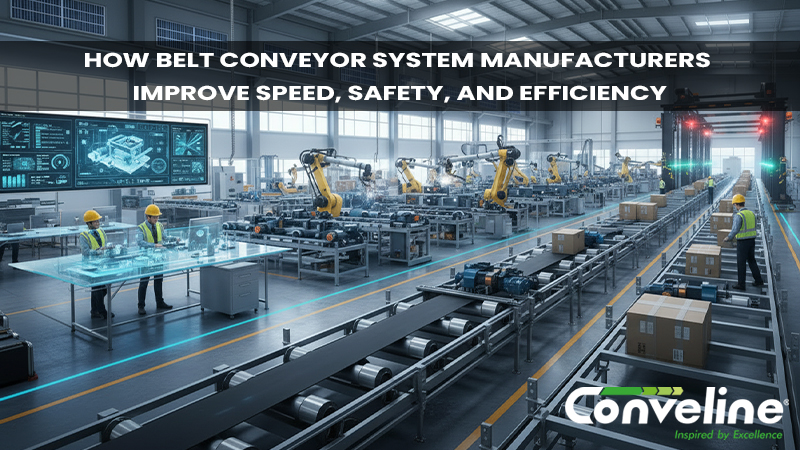
In modern industrial operations, smooth and continuous material movement is a decisive factor in productivity, safety, and cost control. Among the many technologies used for internal logistics, belt conveyors systems stand out as one of the most widely adopted solutions for horizontal and inclined material transport. These systems support consistent product flow across manufacturing, packaging, warehousing, and distribution environments. Industries partner with a reliable conveyor systems manufacturer to integrate conveyors that align with real production demands rather than generic layouts. The expanding role of belt conveyors systems manufacturers in India reflects the rapid growth of industrial automation across sectors such as FMCG, pharmaceuticals, automotive, logistics, and engineering goods. As a professional solution provider, Conveline Systems Pvt. Ltd. operates under the technical identity of conveline systems to design and deliver application-focused belt conveyor solutions. This detailed guide explains how belt conveyors work, their structural design, industrial uses, and the key advantages they offer for material handling performance.
Overview of Belt Conveyor Systems
Basic Working Principle
At a fundamental level, belt conveyors systems use a continuous moving belt supported by rollers or a sliding bed to transport materials from one point to another. The belt loops around pulleys driven by an electric motor that provides the necessary motion. These systems are designed to carry a wide range of materials including cartons, packaged goods, bulk items, and industrial components. A professional belt conveyors systems manufacturer studies the load type, travel distance, operating speed, environmental exposure, and layout constraints before finalizing system configuration.
In the Indian industrial ecosystem, belt conveyors systems manufacturers in India supply solutions adapted for varied operating conditions, from humid processing zones to dust-heavy material handling areas. A dependable conveyor systems manufacturer integrates belt conveyors with upstream and downstream equipment for coordinated workflow. Under the technical working standards followed by conveline systems, belt conveyors are not supplied as isolated machines but as part of a structured material movement strategy.
Benefits, Features, and Importance of Belt Conveyors
Operational Benefits
The primary advantage of belt conveyors systems lies in their ability to provide uninterrupted material flow with minimal manual intervention. These systems reduce the reliance on human handling, which supports higher throughput and improved workplace safety. Industries that work with an experienced conveyor systems manufacturer in India gain access to layouts that align with production planning and floor utilization. Another key benefit is predictable movement speed. With motor-driven pulleys and controlled transmission, conveyor belts deliver steady transfer without product accumulation or irregular stoppages. Facilities that coordinate with a specialized belt conveyors systems manufacturer often achieve better synchronization between production stages.
Structural and Design Features
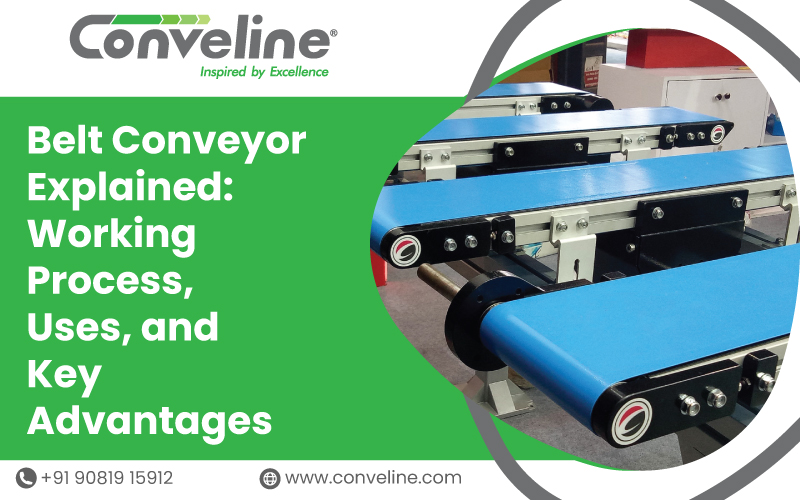
A typical belt conveyor consists of a conveyor belt, drive pulley, tail pulley, supporting rollers, motor, gearbox, and structural frame. The belt material is selected based on product characteristics such as weight, surface sensitivity, temperature exposure, and friction requirements. A professional conveyor systems manufacturer matches belt composition to application needs using rubber, PVC, or fabric-reinforced materials. Frames are fabricated to handle static and dynamic loads over long operating cycles. Under conveline systems, the structural design process remains focused on durability and service accessibility rather than visual aesthetics.
Industrial Importance
In modern supply chains, belt conveyors connect multiple operational zones such as receiving, processing, inspection, packaging, and dispatch. Their integration supports continuous material movement without unnecessary rehandling. With the growing footprint of belt conveyors systems manufacturers in India, domestic industries now rely less on imported equipment for this critical functionality.
Working Process and Core Components of Belt Conveyors
Drive and Control Mechanism
The drive unit supplies rotational force to the belt. Speed control can be fixed or variable, depending on process requirements. Plants that work with conveyor systems manufacturers in India often integrate belt conveyors with sensors and control panels for automated material flow. A skilled belt conveyors systems manufacturer calculates belt tension, motor power, and traction requirements based on load weight, belt length, and working incline. Indian fabricators working under belt conveyors systems manufacturers in India follow standardized engineering formulas to size each component accurately.
Major System Components
The main components of a belt conveyor include:
- Conveyor belt
- Drive and tail pulleys
- Support rollers or sliders
- Drive motor and gearbox
- Tensioning device
- Structural frame
Each component plays a critical role in system stability and performance. A professional conveyor systems manufacturer coordinates the interaction of these elements for balanced operation under continuous duty cycles.
Industrial Uses and Sector-Wise Applications
Manufacturing and Assembly Lines
In manufacturing environments, belt conveyors systems transport components between machining, assembly, and inspection stations. The consistent movement supports synchronized production rhythms.
Packaging and Warehousing
In packaging units, belt conveyors carry cartons to labeling, sealing, and palletizing areas. Warehouses use these systems for order sorting and dispatch preparation. A competent belt conveyors systems manufacturer designs conveyors that handle varying carton sizes without layout congestion.
Logistics and Distribution Centers
Distribution hubs rely on belt conveyors for high-volume movement of parcels across scanning and sorting zones. In these applications, selection guidance from a professional conveyor systems manufacturer becomes critical for sustained throughput.
Regional Industrial Deployment
In western India, industries benefit from the proximity of belt conveyors systems manufacturers in Ahmedabad, which support automotive, textile, pharmaceutical, and engineering units with regional fabrication and faster project coordination. Conveline Systems Pvt. Ltd. has executed belt conveyor projects for multiple industrial clients across such zones.
Design, Selection, and Engineering Considerations
Load and Capacity Evaluation
Correct selection of belt conveyors systems begins with accurate load analysis. Factors such as unit weight, product dimensions, accumulation patterns, and duty cycles define conveyor capacity. A qualified belt conveyors systems manufacturer performs these calculations before recommending belt width, motor rating, and frame strength.
Belt Material and Surface Selection
Belt composition varies by application. Lightweight goods use PVC belts, while heavy or abrasive materials require rubberized or reinforced belts. Engineering teams working with conveyor systems manufacturers in India select belt surfaces that match product behavior and friction requirements.
Layout and Integration Planning
Floor layout constraints influence conveyor routing, incline angles, and transfer points. Guidance from a specialized conveyor systems manufacturer supports smooth integration with existing production equipment. Under the engineering methodology of conveline systems, layout planning remains process-driven rather than machinery-driven.
Supplier and Fabrication Strategy
Plants often prefer sourcing from belt conveyors systems manufacturers in India due to regional material sourcing and application familiarity. For Gujarat-based industries, belt conveyors systems manufacturers in Ahmedabad offer logistical convenience and easier inspection access during fabrication.
Maintenance, Safety, and Operational Reliability
Routine Maintenance Practices
The operational life of belt conveyors systems depends heavily on disciplined maintenance. Key tasks include belt alignment checks, pulley inspection, bearing lubrication, and frame condition monitoring. A professional belt conveyors systems manufacturer provides maintenance documentation tailored to system design.
Safety Measures in Belt Conveyor Operations
Safety accessories such as emergency pull cords, belt guards, and controlled discharge zones support safe material transport. Facilities that work closely with conveyor systems manufacturers in India integrate these safety elements into their standard operating procedures.
Long-Term Reliability Factors
Operational reliability depends on quality of installation, load matching, and preventive maintenance consistency. Under conveline systems, project execution includes functional testing and commissioning protocols before handing over systems to clients.
Why Choose Us – Conveline Systems Pvt. Ltd.
As a committed industrial partner, Conveline Systems Pvt. Ltd. delivers high-performance belt conveyors systems through disciplined engineering design, structured fabrication practices, and project-focused execution under the technical identity of conveline systems, supporting long-term material handling reliability and client trust across diverse manufacturing environments.
Conclusion
Belt conveyors systems continue to serve as one of the most reliable and adaptable solutions for internal material handling across industrial sectors. Their working process, wide application range, and structural simplicity make them suitable for both light-duty and medium-duty transport needs. Collaboration with a qualified belt conveyors systems manufacturer and experienced conveyor systems manufacturers in India allows industries to align conveyor performance with actual production demands. Regional support from belt conveyors systems manufacturers in Ahmedabad further strengthens project coordination. With engineering guidance delivered through Conveline Systems Pvt. Ltd. under conveline systems, industries obtain structured material movement with dependable operational consistency.
For customized belt conveyor solutions designed for your production facility, connect with Conveline Systems Pvt. Ltd. today. Call +91 9081915912 or email info@conveline.com for expert technical consultation.
FAQs
- What makes belt conveyors suitable for continuous material transport?
Belt conveyors systems provide uninterrupted movement using a continuous belt loop, which supports steady material flow across long distances and multiple workstations without manual handling interruptions. - How does a belt conveyors systems manufacturer support project customization?
A specialized belt conveyors systems manufacturer evaluates load characteristics, layout constraints, and process speed to design conveyors that align precisely with the operational workflow of a specific facility. - Why do industries prefer belt conveyors systems manufacturers in India?
Belt conveyors systems manufacturers in India offer regional engineering support, climate-adapted designs, cost-aligned fabrication, and faster service coordination compared to global suppliers. - What advantages do belt conveyors systems manufacturers in Ahmedabad offer to local industries?
Belt conveyors systems manufacturers in Ahmedabad provide regional fabrication access, shorter delivery timelines, and direct technical coordination for industries operating in western India. - How does a conveyor systems manufacturer influence overall conveyor performance?
A professional conveyor systems manufacturer integrates belt selection, structural design, drive configuration, and layout routing into a unified system that determines long-term performance and operational stability.